(Spring semester only) Develop personalized solution to assist impairment of real users
EPFL Assistive Techn... - Project
(Spring semester only)
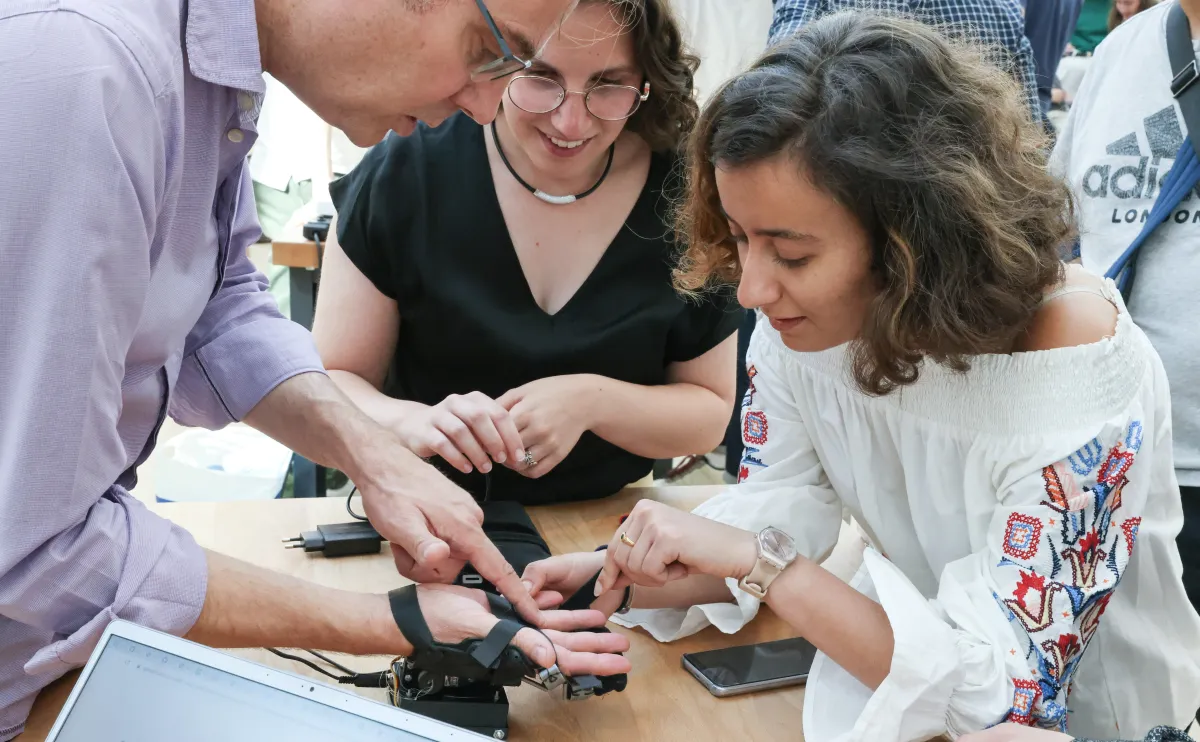
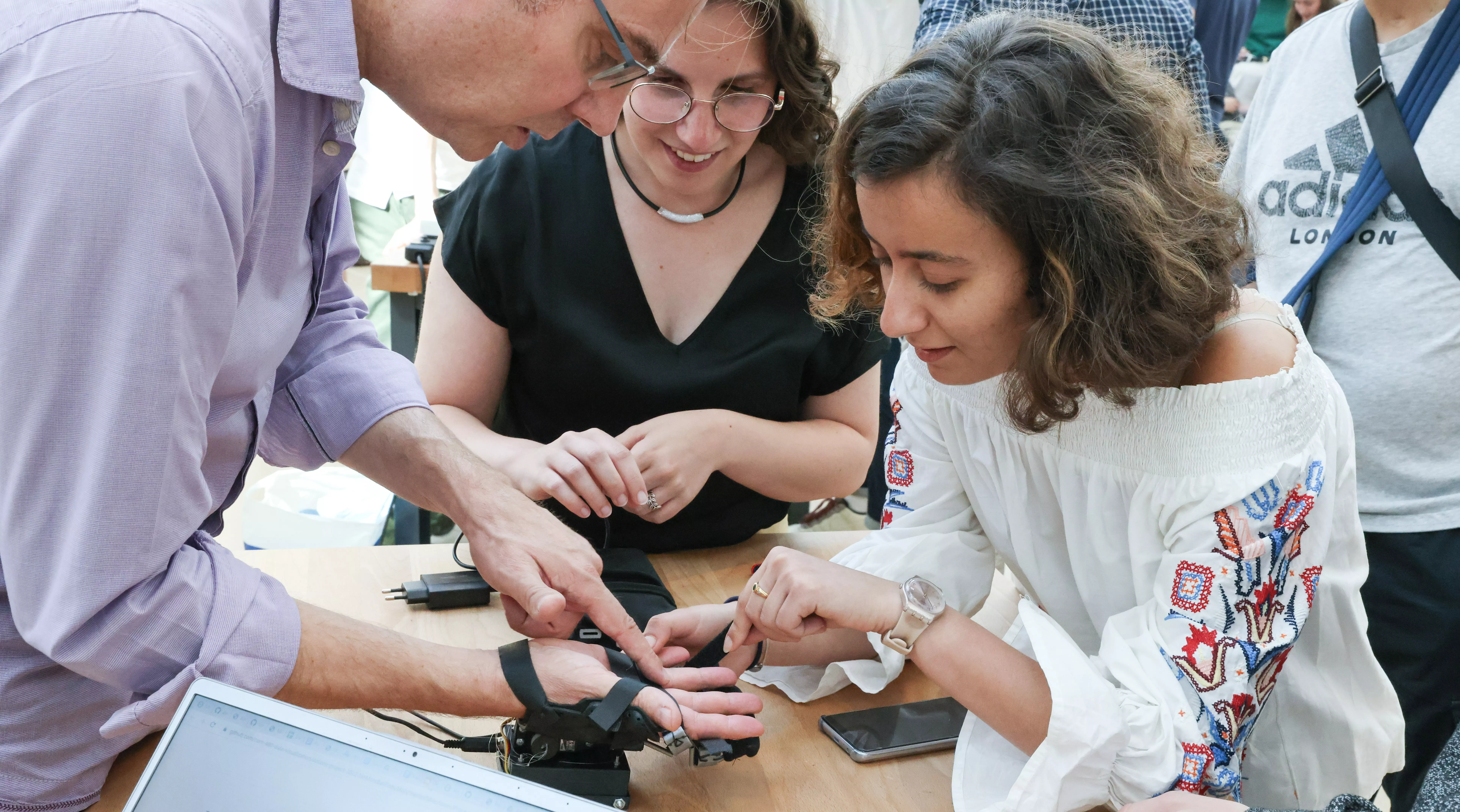
The Assistive Technologies Challenge, will give students the opportunity to design and develop meaningful technological solutions for and with people with disabilities. The challenge aims at giving the students first hand experience in working with real end-users and to understand how their skills and abilities can have a positive impact on society.
The challenge will be offered as a group semester project and is open to all sections within STI (SGM, SMT, SEL, SMX), NX, SV and IC).
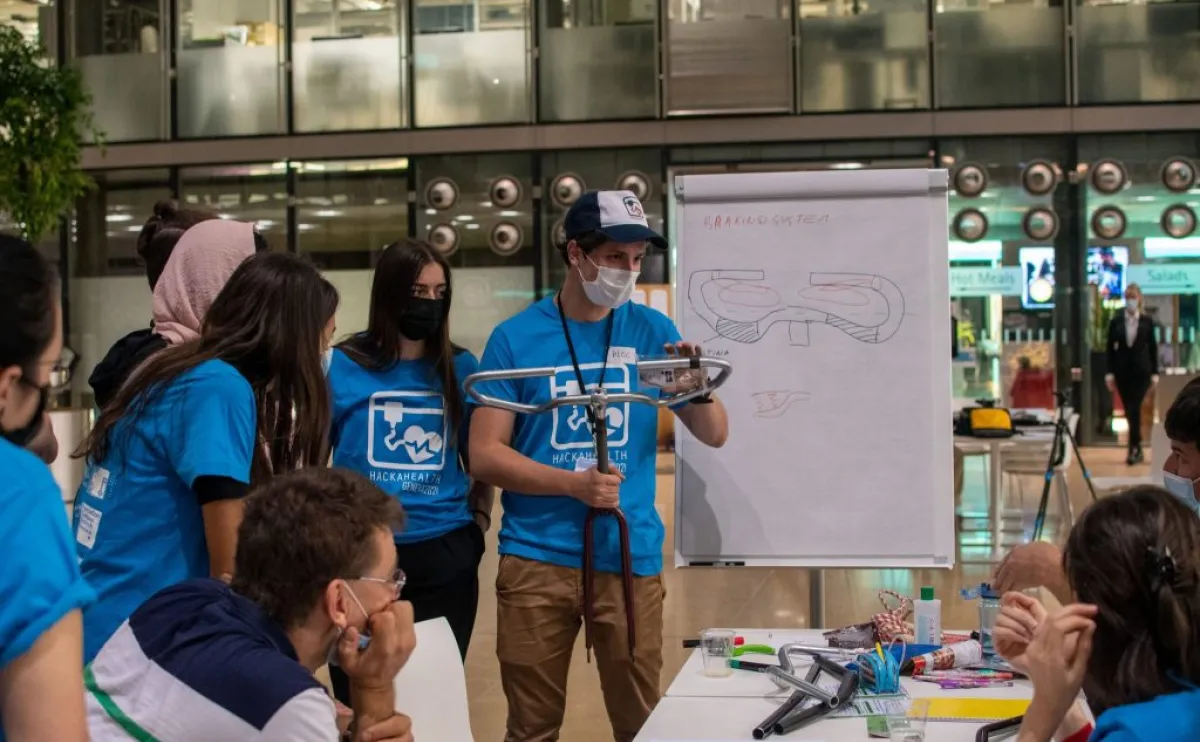
Multidisciplinary teams of 4 students will be assigned a "challenger" with a specific need to solve an everyday challenge. By adopting a "user-in-the-loop" approach, the students will translate these needs into tangible goals. Over the course of several iterations, they will work towards achieving these goals by following an established product design methodology for medical devices.
A project assistant will advise each team by monitoring their progress and providing them guidance during the semester. Furthermore, the students will participate in interactive workshops focused on user-centric design, prototyping methods, project resource management, and the ethical considerations of working with humans within the sphere of medical technologies. Workshops will be on Thursdays 1:15-3pm.
The teams will have access to prototyping facilities, and will be assigned a gracious budget to purchase materials & services.
6 projects are proposed this year :
P1 - Touch-only cooktop adapter for a visually impaired user.
Recent models of cooktops are touch-only, with very little non-visual cues to understand what is happening when operated. For visually impaired users, it is an impossible task to turn it on, determine which part is active, and know the warming up setting chosen. This project aimes at creating a tool to enable visually impaired users to use touch-only cooktops.
P2 - Hyposensory light tunnel for children with ASD.
As a part of a larger sensory corner for relaxation of cihldren on the autistic spectrum, this project aimes at developing a light tunnel (on the theme of the Sea) that can be used by them to lower sensory stress. The children are in 1-3P school classes, ranging between 4 and 7 years old, and are represented for the challenge by the educational team in charge of them at La Cassagne Special School.
P3 - Adapter for autonomous use of a digital camera by a disabled person.
This project aims at developing a solution in order to enable the autonomous use of a photographic camera by a user with spastic tertraplegia. As a wheelchair user with limited use of his limbs, the user needs to be able to have full control of the framing of the picture and parameters of the camera, and be able to take the shot by himself.
P4 - Solution for using music composition software for a blind user.
This project aims at improving the autonomous use of music composition/mixing software for a blind user. At present, the user, who is a musician, needs assistance from a person who can see in order to operate the software. He needs to be able to access various features of the tools autonomously (finding the tracks, performing some editing, saving the results, etc.), potentially through the creation of an analog controller used to map the features and control them.
P5 - Accessible utensils to assist user with muscular impairment to eat and drink safely.
The challenger needs a solution to improve their eating abilites. They has no capacity of swallowing nor chewing food, which means they rely on gravity to absorb nutriment after they have been placed in the mouth. This creates difficulties to drink, because the liquid either overflows on the corners of the mouth or gets in in too big quantity, potentially provoking choking. Difficulties are also met to absorb solid food, as hard food can get stuck in the oesophagus, and complex foods (having layers of different thickness or hardness) are hard to cut and absorb. The challenger also has motor impairment on one side of the body, which makes them unable to easily cut the solid food in small pieces. The challenge aims at developing a "meal kit" that helps with absorption of liquids in controlled quantities, and improves the possibility of accessing hard food for nutrition.
P6 - Accessible domestic space for a user with ectrodactyly
The challenger is missing fingers on one hand, including an opposable thumb (a condition called ectrodactyly), and needs a solution to improve daily use of appliances and objects in the domestic space (opening doors or trays, pushing or turuning buttons, grabbing and carrying objects or ustensils). Base on an initial observation in situ at the challenger's home in order to prioritize the needs, the project will aim at developing a few adaptations to facilitate the challenger's life at home.
Regitration now open until January 9th 2026.
To register in the challenge, please visit : https://go.epfl.ch/creg For more info, get in touch with the coordinator : quentin.delval@epfl.ch